Catching the Hidden Issues Early
For many boat owners in Brisbane and South East Queensland, weekend trips out on the water are the ultimate reward after a busy week. Whether you are fishing in Moreton Bay or cruising the coast, you rely heavily on the strength of your boat hull to keep you and your family safe.
Because fibreglass is an incredibly tough and durable material, it can absorb a lot of punishment from waves, choppy water, and regular trailing. However, it is not indestructible. While some bumps and scrapes are just surface marks, other hidden issues can quietly compromise the structural integrity of your vessel.
If structural fibreglass damage is left ignored, particularly neglecting gelcoat hairline cracks can cause water to slowly seep into the internal layers of the boat. Over time, this causes delamination, rotted timber cores, and weak points that could fail when you are far from the boat ramp. Learning how to properly inspect your vessel can save you thousands of dollars in major repair costs down the track.
Spotting the Difference Between Cosmetic and Structural Damage
When you look at the outside of your boat, you are looking at the gelcoat. This is the hard, shiny outer layer that protects the structural fibreglass underneath from water and sun damage.
If you scrape against a pontoon or hit a rogue branch, you might scratch the gelcoat. If the scratch is shallow and you can still see the same colour all the way through, it is generally a cosmetic issue that can be easily fixed with minor boat gelcoat repairs
However, structural damage is a much deeper problem. Here are the key warning signs that mean the structural fibreglass or internal core of your trailer boat has been compromised:
Deep Gouges Past the Gelcoat:
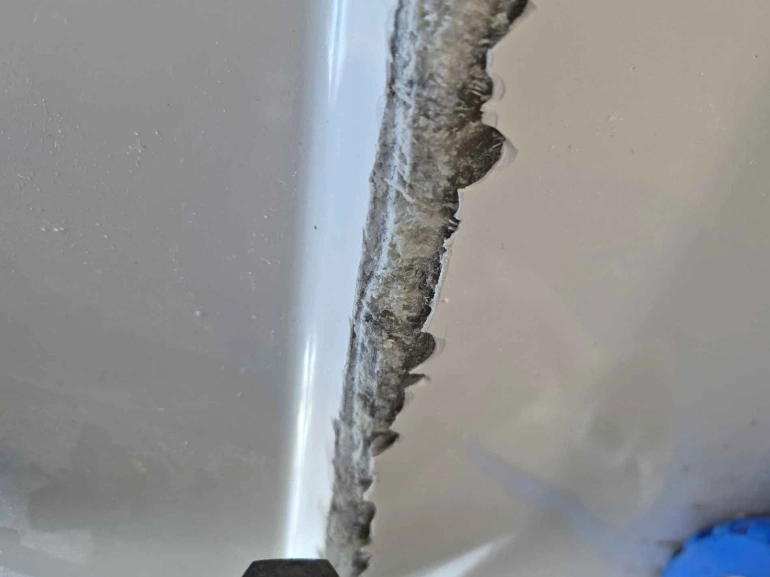
If a scratch or gouge is deep enough to reveal a different material underneath, such as rough, woven strands of glass fabric, the protective layer is gone. Water will now actively soak into the bare fibreglass layers every time the boat is submerged.
Flexing or Soft Spots:
If you press firmly on the hull, transoms, or floor panels and feel the material bend or give way under your hand, the internal structural layers have separated. A healthy fibreglass hull should always feel completely rigid.
Hollow Sounds During a Tap Test:
You can gently tap around your hull and transom using a small plastic mallet or the handle of a screwdriver. A solid, healthy panel will produce a sharp, crisp clicking sound. If the sound suddenly turns into a dull, hollow thud, it often indicates internal delamination or core rot.
Cracking Around High-Stress Areas:
Keep a close eye on the areas around your outboard motor mount, the towing eye, and where the hull rests on the trailer rollers. Cracks in these high-stress zones are often a sign that the structural framework beneath is moving or flexing too much.
The Danger of a Weakened Boat Transom
The transom is the vertical panel at the very back of your boat where the outboard motor is mounted. It has to handle the massive weight of the engine, as well as the immense twisting force generated when you accelerate through the water.
Many traditional trailer boats use a thick plywood core sandwiched inside the fibreglass to give the transom its strength. If water manages to bypass old sealants around mounting bolts or drain holes, the timber core will begin to absorb the moisture.
Because this timber is completely sealed inside the fibreglass, the moisture cannot escape. The wood slowly rots away, leaving you with a hollow, weakened transom. If you notice your outboard motor shaking or flexing the back of the boat when you rev the engine, you must stop using the vessel immediately. Rectifying this issue requires professional transom reconstruction in a controlled environment to ensure the boat is safe to handle high horse-power motors again.
Why Trailer Alignment Matters
Interestingly, a large portion of structural hull repairs do not happen from hitting rocks in the water. Instead, they happen right on the highway or at the boat ramp due to poor trailer setup.
If your trailer rollers or skids are not aligned correctly according to manufacturer guidelines, the entire weight of the boat will press down on just a few small spots instead of being spread out evenly. As you drive over bumps and potholes, these misaligned rollers can cause localised pressure cracking or punctures directly through the bottom of the hull. When inspecting your boat, always crawl underneath and check the exact points where the hull meets the trailer supports to ensure no indentation or cracking is taking place.
Why True Structural Repairs Cannot Be Done on a Driveway
If your inspection reveals deep structural cracking, a flexing transom, or extensive hull damage, the boat cannot be safely repaired using basic mobile services or DIY kits. For a structural repair to be successful and legal under insurance guidelines, the boat must be taken to a fully equipped workshop facility.
Laying up new structural fibreglass requires a completely stable environment. At our Brisbane workshop, we use an industrial overhead gantry system to lift trailer boats completely off their frames. This is the only way a technician can properly inspect the keel, grind away the damaged material safely, and lay up new multi-axial e-glass fabrics at the correct mechanical angles.
Furthermore, structural marine resins require precise temperature control to cure to their maximum strength. Performing this work outside on a driveway leaves the liquid resins exposed to moisture, wind, dust, and fluctuating temperatures, which can ruin the chemical bond and leave you with a weak repair.
Final Thoughts
Regularly inspecting your trailer boat is an essential part of responsible boat ownership. Catching a small structural fracture or an unsealed gouge early can mean the difference between a simple, localised repair and an incredibly expensive structural rebuild. It is worth speaking to a professional fibreglass boat repair company early, before the damage comes more significant.
If you have noticed any soft spots, hollow sounds, or deep cracks during your regular check, do not take the risk of heading out into open water. Contact the team at RnR Refinish today to book an expert assessment at our Brisbane workshop, where we can provide you with a factual report on the structural health of your vessel.