The Hard Working Outer Shell of Your Boat
When you look at a beautifully finished fibreglass boat glinting in the sun at a Brisbane boat ramp, you are looking at the gelcoat. Gelcoat is a specially formulated resin layer applied to the outside of the fibreglass hull during manufacturing. It acts as a hard protective skin, sealing the structural fibreglass layers underneath from water, salt, and intense Queensland sunshine.
Because gelcoat is quite rigid, it is prone to showing signs of stress and environmental wear over time. Many boat owners notice tiny spiderweb lines or circular fractures appearing on their decks or hulls. These are known in the marine industry as gelcoat crazing or star crazing. Our boat fibreglass repair services deal with all of these issues.
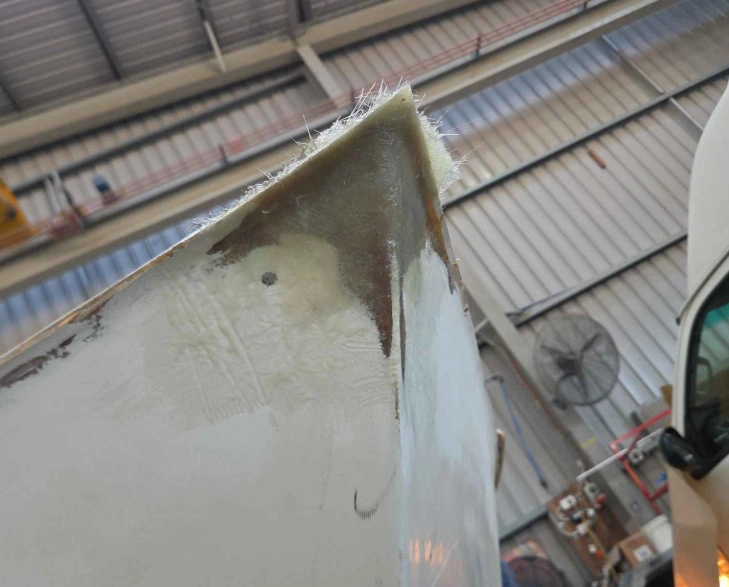
While a few fine lines might look like a simple cosmetic nuisance, ignoring them can open the door to serious moisture problems. Understanding how gelcoat ages and behaves is the best way to protect your boat from expensive long term damage. Not all damage is hard to see though. We regaularly see boats with structural fibreglass damage and it is important that you engage a professional to do an assessment, as small problems turn into big ones when talking about boat fibreglass.
What Causes Gelcoat Crazing and Star Crazing?
Gelcoat cracks do not just happen for one single reason. They are usually the result of everyday environmental forces or minor physical impacts interacting with the rigid surface of your boat.
Flexing Under Heavy Loads:
As your boat smashes through choppy waves or handles tight turns, the fibreglass hull naturally flexes to absorb the energy. Because gelcoat is much less flexible than the structural fibreglass beneath it, the surface layer can crack under the strain, resulting in fine hairline lines.
Impact Damage:
If a heavy sinker hits the deck, or if the hull bumps against a jetty or an improperly adjusted trailer roller, it causes localised stress. This physical shock often produces star crazing, which looks like a series of tiny cracks radiating outward from a single central point.
Thermal Expansion and Contraction:
Living in South East Queensland means your boat is subjected to intense heat during the day and cooler temperatures at night. This constant shifting causes the materials to expand and contract, putting steady pressure on the gelcoat.
The Danger of Ignoring Hairline Surface Cracks
It is tempting to look at minor gelcoat crazing and decide to leave it until next season. However, even the smallest hairline crack breaks the watertight seal of your hull.
Every time you launch your boat, water is forced into those tiny cracks under pressure. Over time, moisture begins to work its way behind the gelcoat layer and penetrates the raw structural fibreglass fabric beneath.
Once moisture gets trapped inside the fibreglass matrix, a chemical reaction can occur, leading to structural delamination and blistering. What started out as a simple cosmetic scratch can eventually turn into a deep, water-logged failure point that requires extensive, costly reconstruction at a dedicated workshop.
The Technical Truth About Gelcoat Blending Repairs
When it comes to fixing these issues, boat owners often ask if a technician can simply patch up the small cracked area and blend it into the surrounding panel. While minor cosmetic chip repairs are ideal for quick, localised touch-ups, it is important to understand the material science of gelcoat blending.
Blended repairs will naturally break down over time because the original gelcoat and the newly repaired section age at completely different rates. When a repair is first completed in a workshop, the blend area can look perfectly seamless. However, as the boat is exposed to UV sunlight, temperature changes, and general outdoor use, the two separate sections respond differently to the weather.
Over time, this natural variation in ageing can cause the transition area to become noticeable again as the panel continues to weather. The speed at which a blend area breaks down and develops a chalky outline depends heavily on several factors:
- The current age and condition of the original gelcoat
- Where the repair area is located on the vessel
- The specific colour of the boat, as darker shades show variations much faster
- The total amount of direct UV exposure the boat receives
Because of these natural factors, if a boat has extensive grey or dark UV damage, it is often not at a suitable level to blend onto successfully. In these cases, the correct repair process requires priming the full panel surface, blocking it smooth, and executing a complete panel respray in a controlled marine spray booth to guarantee a long-lasting, uniform finish.
Choosing the Right Fix for Your Vessel
Because different types of gelcoat wear require different solutions, repairs should always match the actual condition of the boat:
Minor Cosmetic Scopes
If your boat has a couple of shallow scratches or minor chips from a dock encounter, a localised repair is highly effective. These small cosmetic fixes can often be handled quickly by mobile marine repair units directly at your home or local marina to minimise your downtime.
Large Scale Crazing and UV Damage
If your deck or hull is covered in extensive star crazing, deep structural cracking, or severe chalkiness, a mobile touch-up is not a suitable solution. True restoration requires a structured workshop process. This includes removing all deck hardware, stripping old sealants, grinding out the cracked substrate, priming the entire panel, and executing a professional respray inside a clean spray booth environment.
Final Thoughts
The outer skin of your boat is its only line of defence against the harsh marine environment. Keeping an eye out for fine hairline cracks, fading, and star crazing allows you to step in before water ingress compromises the underlying fibreglass structure.
If you have noticed the gelcoat on your vessel starting to chalk, fade, or develop fine spiderweb fractures, do not wait for the moisture to sink deeper. Contact the team at RnR Refinish today to speak with a technical expert or to arrange a comprehensive inspection of your boat’s surface condition.