Caravan and Motorhome Leak and Water Ingress Assessments
Find Where Water Is Getting in Before More Damage Is Done
Water ingress in a caravan, campervan or motorhome isn’t always easy to find. Water can enter through one area and travel through walls, flooring or roof structures before becoming visible somewhere completely different.
You may first notice water stains, a musty smell, damp areas, soft flooring or walls, bubbling or delaminating panels, deteriorated seals or moisture appearing after heavy rain. In other cases, there may be no obvious sign of where the water is actually getting in.
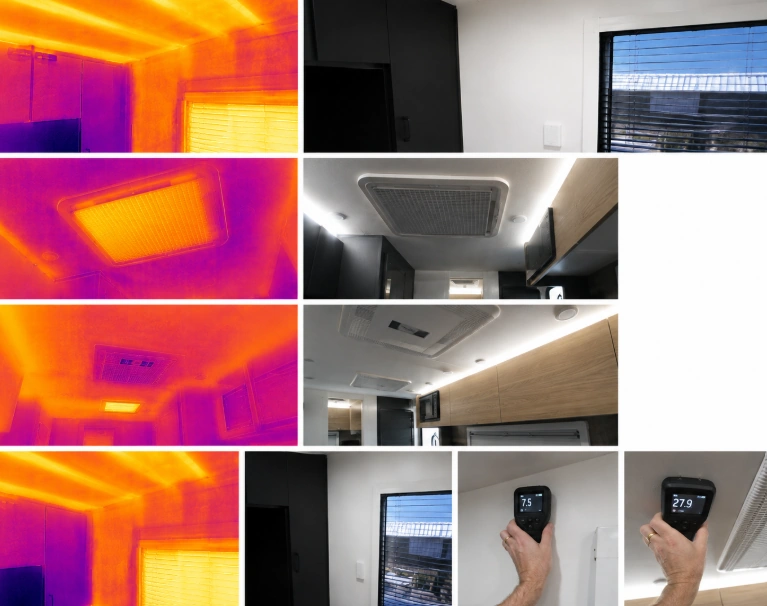
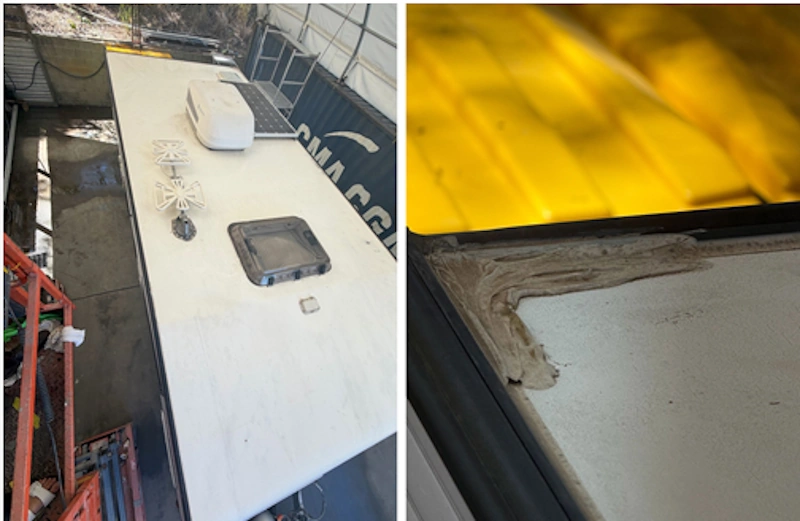
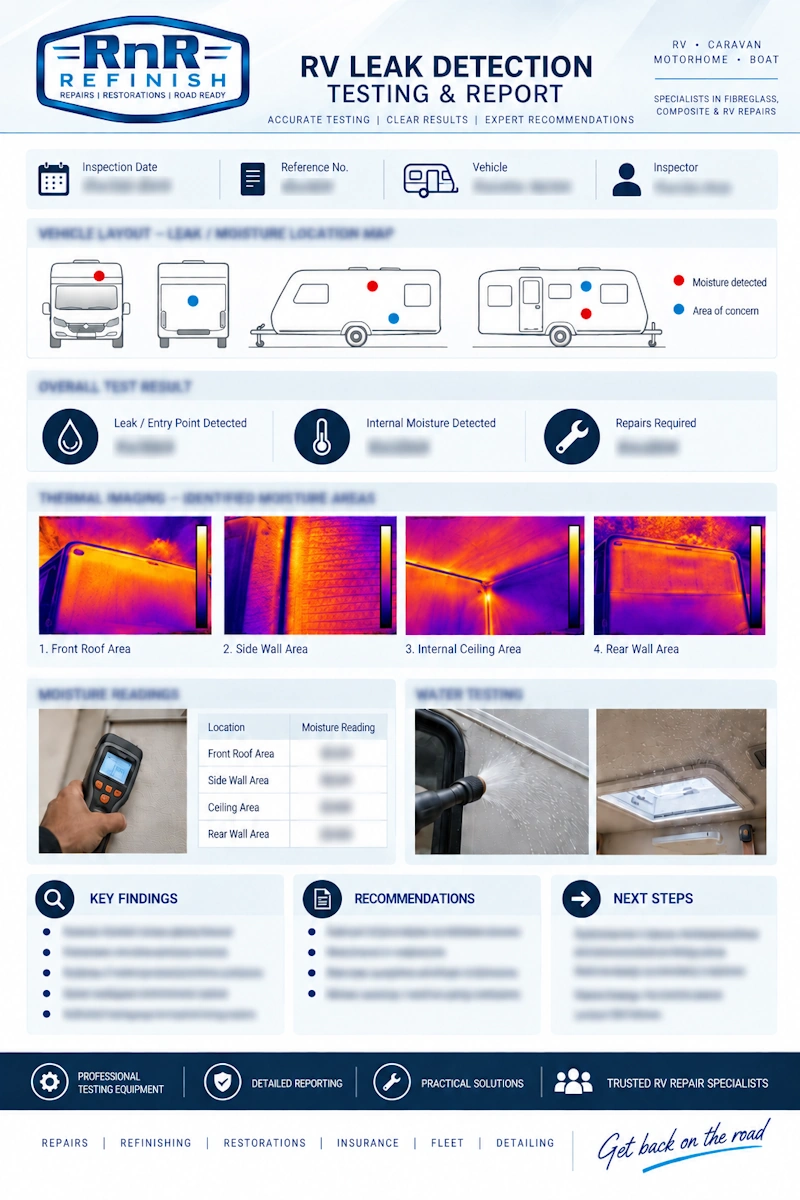
RNR Refinish provides professional Leak Detection & Water Ingress Assessments for caravans, campervans and motorhomes. Our assessment combines thermal imaging, moisture readings and a detailed visual inspection to help identify and document areas showing evidence consistent with concealed moisture or water ingress.
Where required, we can also carry out controlled water ingress testing to investigate suspected entry points.
The result is a clearer understanding of where moisture has been identified, where water may be entering and what should happen next, supported by photographic evidence and a written report. If repairs are required, RNR Refinish can also assess the damage and recommend the appropriate repair method.
A More Thorough Way to Investigate Caravan Leaks
Finding a caravan leak isn’t always as simple as looking for a damaged seal.
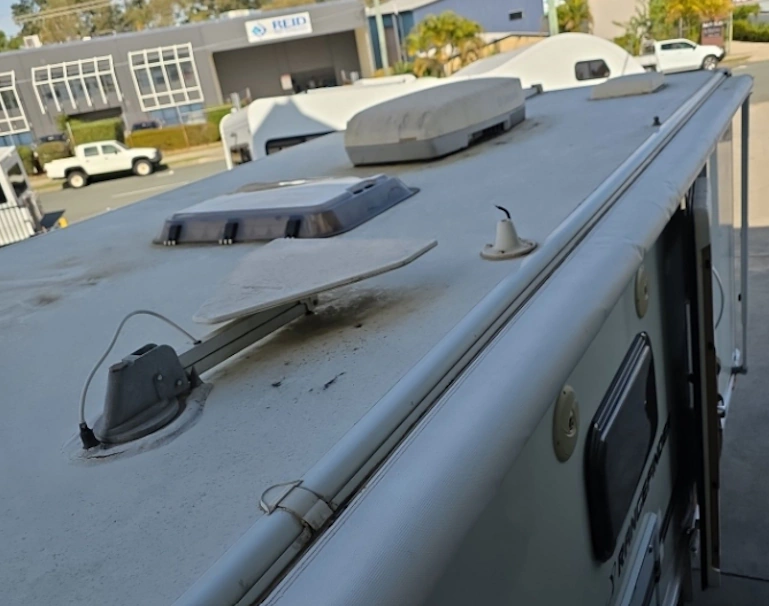
Water can enter around windows, doors, roof hatches, vents, mouldings, external sealants and other penetrations. Once inside, moisture can migrate through different parts of the vehicle before becoming visible.
That is why RNR Refinish doesn’t rely on one method of testing.
Our assessment brings together thermal imaging, moisture testing and visual inspection to gather factual information about the condition of your caravan, campervan or motorhome at the time of inspection.
The process can be used across different RV construction methods, including fibreglass, composite panels, aluminium cladding, laminated wall systems, insulated roof structures and flooring.
What Is Included in the Assessment?
Depending on your vehicle and the areas requiring investigation, your assessment may include:
- Thermal imaging scan of accessible areas
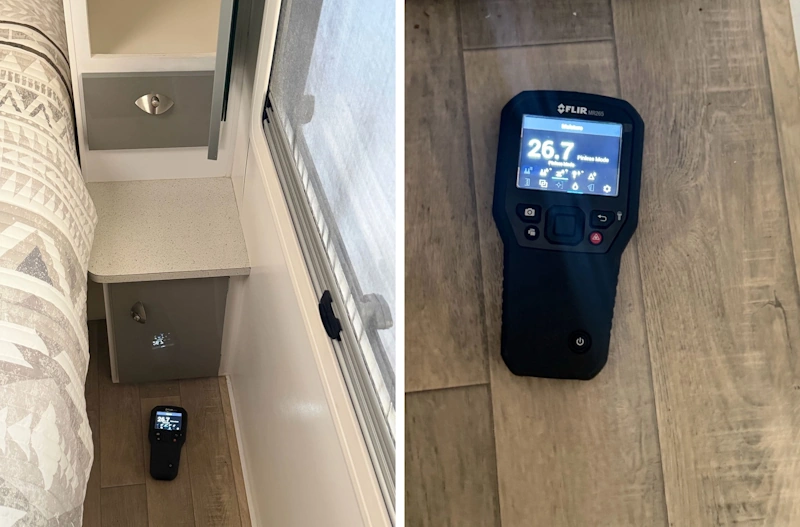
- Moisture readings of relevant areas
- Visual assessment of accessible roofs, walls, floors and structural areas
- Inspection of windows, doors, roof hatches and vents
- Inspection of mouldings and external sealants
- Assessment of visible staining, delamination or deterioration
- Identification of suspected moisture migration paths
- Identification and documentation of potential water entry locations
- Controlled water ingress testing where required
- Photographic evidence of relevant findings
- Assessment findings and recommendations
- A written Leak Detection & Water Ingress Report
The purpose is not simply to tell you that moisture has been detected. We want to provide useful information about where the problem may be occurring, how far it may have travelled and what may need to be investigated or repaired next.
Thermal Imaging Helps Us Look Beyond the Surface
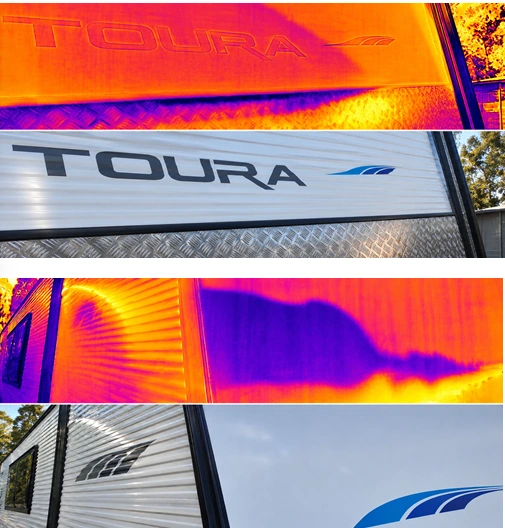
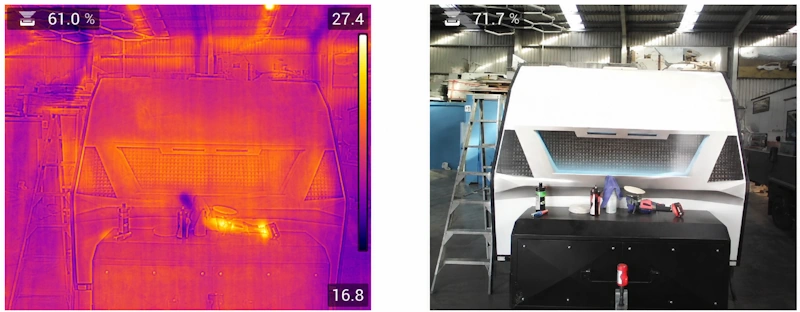
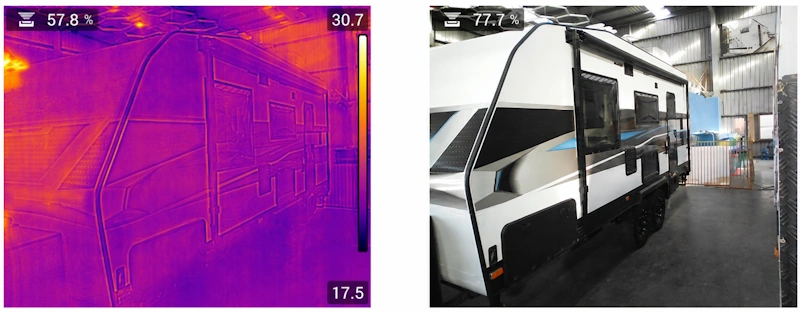
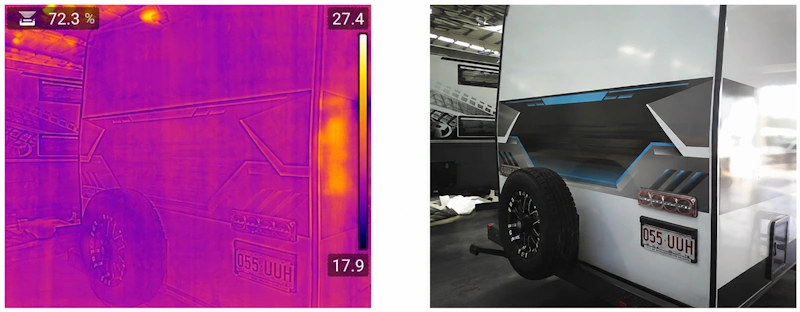
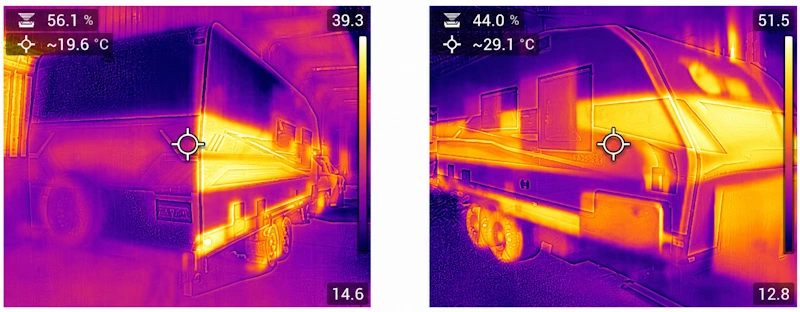
Thermal imaging is an important part of the RNR Refinish leak detection process because moisture isn’t always visible from the surface.
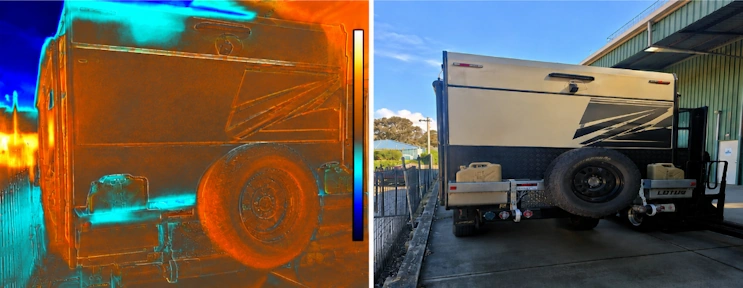
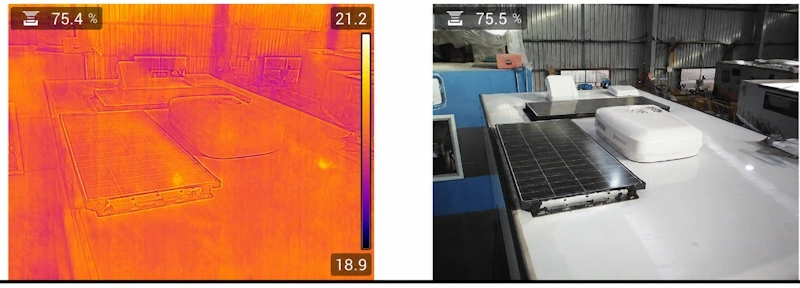
Water trapped within a roof, wall, floor or other component may create a temperature difference compared with surrounding areas made from the same material. Thermal imaging allows our technicians to identify and investigate these variations.
The shape, severity and contrast of a thermal anomaly can also help identify possible moisture migration patterns and suspected water entry locations.
However, thermal imaging alone does not prove that moisture is present.
Our technicians interpret thermal images alongside the vehicle’s construction, visual inspection, and moisture readings where appropriate. This provides a more complete assessment rather than relying on a thermal image alone.
The thermal moisture scanning process is also non-destructive and does not damage vehicle components, finishes or sealants during the inspection.
Where Do We Look for Caravan and Motorhome Water Leaks?
Every caravan and motorhome is different, so the inspection is based on the vehicle and the evidence found during the assessment.
Accessible areas that may be inspected include:
- Roofs and roof structures
- Walls and flooring
- Windows and window frames
- Doors
- Roof hatches and vents
- Mouldings
- External sealants
- Accessible structural components
- Areas showing staining, delamination or deterioration
We may also document the condition of relevant seals and components, including evidence of ageing, cracking, shrinking, splitting, separation, deterioration or suspected failure.
Finding moisture is only part of the investigation. Our aim is to identify where moisture is present, investigate how it may have travelled through the vehicle and, where the available evidence allows, identify the suspected point of water entry.
Controlled Water Ingress Testing
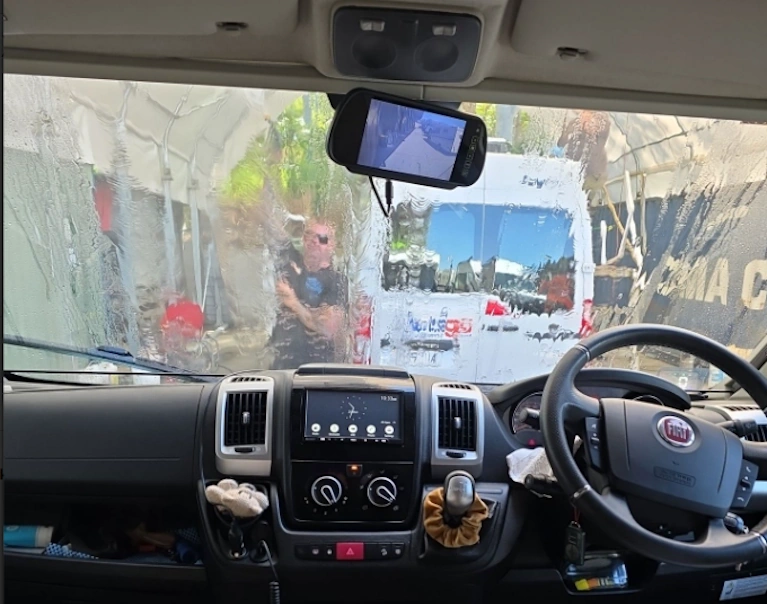
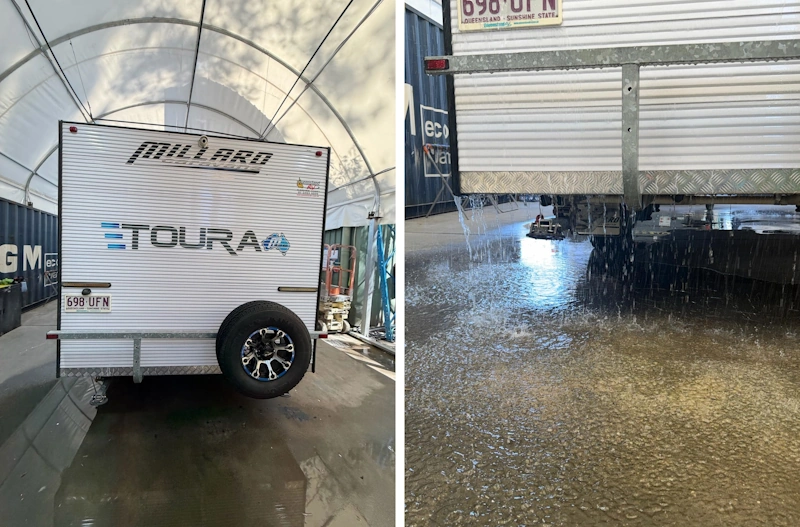
Where further testing is required, RNR Refinish can carry out a controlled water ingress test.
Our documented procedure includes a 20-minute water test, with start and stop times recorded and supporting photographic evidence taken during the process.
The purpose of the test is to help determine whether suspected water entry can be reproduced or observed during the assessment.
Water testing does not replace thermal imaging, moisture readings or visual inspection. Instead, the different methods work together to build a clearer picture of what is happening and provide stronger evidence of the possible source.
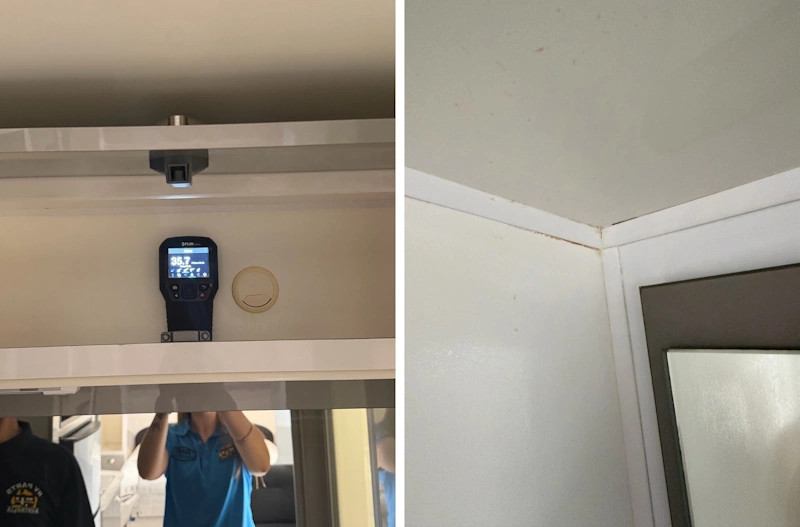
What Happens If Water Ingress Is Found?
If our assessment identifies evidence consistent with water ingress, we will document the affected or suspected areas in your report.
Depending on what we find, recommendations may include resealing, repairs, further investigation, moisture monitoring or assessment of possible structural damage.
This is particularly important with caravans and motorhomes because the damage you can see may only be part of the problem.
RnR Refinish is also an experienced caravan and RV repair specialist. This means we can go beyond simply identifying the problem. Where repairs are required, our team can assess the affected areas and determine an appropriate repair methodology.
The leak detection assessment is an inspection and reporting service. Any subsequent repairs, replacement components or rectification work are separate and will be quoted where required.
Your Leak Detection & Water Ingress Report
Following the assessment, you will receive a written report documenting the relevant findings from the inspection.
Depending on what is identified, your report may include:
- Relevant thermal images and moisture readings
- Water-test photographs where applicable
- Photographs of seals, components or visible damage
- Identified or suspected water entry locations
- Identified moisture locations
- Assessment findings
- Recommendations for further investigation or repairs
The report provides factual information about the vehicle’s condition at the time of inspection and can help the owner, insurer, and repairer understand potential water ingress and determine the appropriate next steps.
Leak Detection Reports for Insurance Claims
If water ingress or resulting damage may be connected with an insurance claim, having the problem professionally assessed and documented can be particularly important.
RnR Refinish has more than 15 years of experience working with major insurance companies and understands the assessment and repair process for caravans, campervans and motorhomes.
Our reports document inspection findings and help customers and insurers understand the vehicle’s condition. They are not prepared for external disputes, litigation or other legal proceedings.
Depending on your individual insurance policy and circumstances, you may also be eligible to have the cost of the leak detection assessment reimbursed. We recommend checking your coverage directly with your insurer before proceeding.
If water ingress is identified, speak with your insurer before proceeding with insurance-related repairs so you can follow the correct assessment and claims process.
Warning: The Testing Methods We Avoid
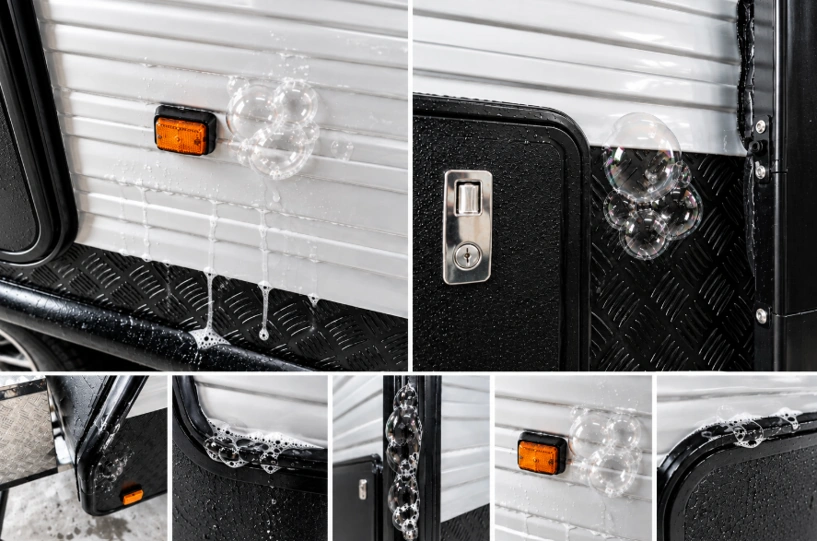
Recently, some repairers have started using positive-pressure fans inside the RV while spraying the exterior with a garden pump bottle and soapy water to look for bubbles. We strongly advise against this testing method. For more information, please see our blog post The Hidden Danger of RV Pressure Testing.
While it looks visually impressive to a customer, it is highly misleading and can cause the leaks it claims to find.
- The “Upside-Down Sink” Reality: Caravan seals are designed to keep outside water out. They are not designed to withstand heavy air pressure pushing from the inside out. Think of a kitchen sink: if you put the plug in and fill it with water, it seals perfectly. If you flip that sink upside down and put pressure on the plug, it leaks immediately.
- Creating Damage: Forcing air pressure from the inside out pushes seals in the wrong direction, often creating holes where there were none. We have seen lock-tight, fully verified reseals taken to other facilities for this “soapy water test,” only for the pressure to blow holes in the fresh sealant.
- Customers are often charged over $1,000 for these pressure tests, only to end up paying even more to rectify the damage caused by the test itself.
Positive-pressure leak detection is inaccurate and often causes more damage and leaks, creates false visual leak areas, and can lead to excessive repairs based on false reports. Soapy water creates bubbles in general, and the higher the soap-to-water ratio and the harder it’s applied, the more foam and bubbles it creates, which shows false leaks and indicates areas of poor seals that aren’t the case. Air pockets & gaps in caravans and motorhomes aren’t airtight from the factory, and even when sealed correctly, they will still show large bubbles and visible signs of water leaks.
Water leak pressure testing, once applied, creates holes in unaffected seals and areas and can leave your van with more damage than before the test. Bubbles will also vary and change depending on the profile where it’s applied; textured or ribbed areas often create soapy water that shows bubbles even on flat surfaces. Overlapping cladding sheets that are bonded and sealed underneath will also show bubbles in most cases, but this is because pressure has to escape somewhere, and seals are not designed to withstand it. Spraying around hardware that is foam-taped from the factory will also show, as will hatches that have the insert sealed correctly, but the lid will always have air gaps underneath from the factory, and testing images show soapy water bubbles. Spraying soapy water around a live 240v outlet to show leaks is another example of false visual damage.
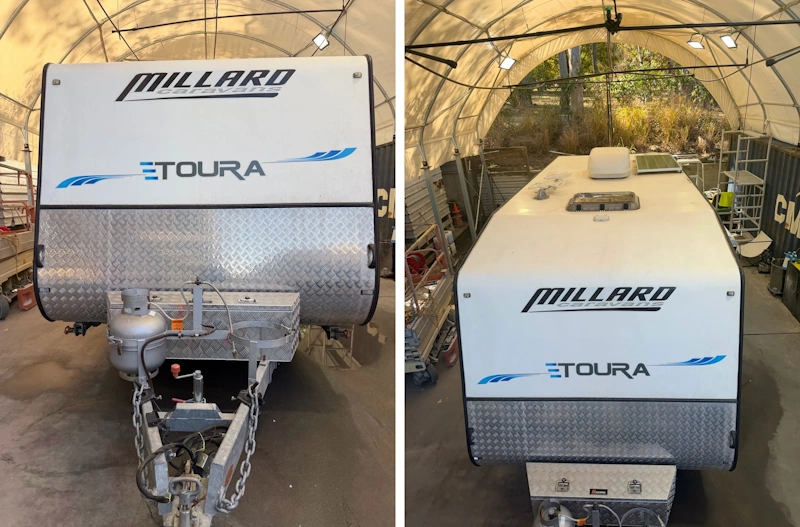
The images show a completed insurance job that was resheeted and resealed correctly, following our procedures and repair standards. It was leak-detection tested using the correct method and passed with no leaks, and all scan images, moisture readings, and water-testing reports and images were provided. It was then sent to an established traditional caravan repairer who claims to provide positive-air-pressure leak-detection testing and specialises in this area.
The report stated it has leaks around the entire van; no moisture-reading images were provided, nor any further information or supporting facts. The van now has holes and water entry points throughout the exterior that weren’t there before, caused by excessive pressure on the seals from behind, which causes leaks. Now this van requires a full exterior reseal to fix the damages