Motorhome Insurance Repairs
Expert Insurance Repairs for Motorhomes
Motorhome damage can involve the vehicle body, roof, living area, chassis, fitted equipment and mechanical systems within the same claim. What initially appears to be a cracked panel or damaged corner may also affect internal framing, seals, cabinetry, wiring or components hidden behind the visible damage.
RnR Refinish provides specialist motorhome insurance repairs from our purpose-built repair centre in Clontarf, Brisbane. We inspect the damage, prepare a detailed repair quotation and work with your insurer or appointed assessor throughout the approval and repair process.
Our team repairs motorhomes affected by accidents, overhead impacts, animal strikes, hail, storms, water ingress, floor damage and other insured events. Depending on the repair, the work may involve fibreglass reconstruction, composite panel repairs, structural alignment, floor and slide-out rebuilding, component replacement, spray painting and selected mechanical work connected to the claim.
With more than 15 years of insurance repair experience, RnR Refinish understands both the technical requirements of complex motorhome repairs and the information insurers need when reviewing a claim. Your repair remains under one coordinated process from the initial assessment through to testing, quality control and handover.
Specialist Repairs for Motorhomes
A motorhome has parts engineered to work together, including fibreglass mouldings, composite body panels, aluminium framing, specialised flooring, slide-outs, cabinetry, plumbing, electrical systems, appliances, roof-mounted equipment, and mechanical components. Damage to one area can therefore affect several connected systems.
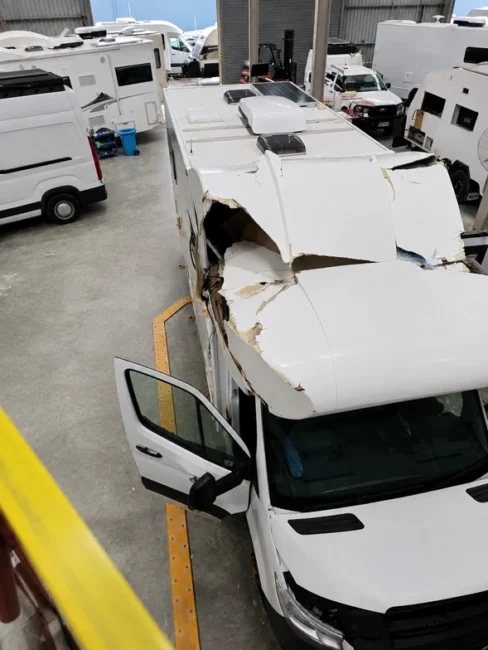
An impact to the upper body may damage the roof, Luton peak, air conditioner, awning, solar panels and nearby cabinetry. A collision at the rear may affect fibreglass panels, tail lights, storage compartments, framing and mounted components. Water entering around a damaged roof fitting can travel into walls, insulation and flooring before the full extent becomes visible.
RnR Refinish assesses the damaged area in the context of the complete motorhome. The objective is not simply to improve the appearance of the outer panel. It is to determine what has been affected, select a repair method suited to the vehicle’s construction and provide the insurer with a clear scope of work.
Our Clontarf workshop can accommodate large motorhomes and repairs requiring extensive dismantling, lifting, body work, structural repairs, floor rebuilding, spray painting, reassembly and selected mechanical attention.
Where manufacturer repair information is available, it can be considered when planning the work. The final repair method must also reflect the construction of the vehicle, the extent of the damage and the work authorised by the insurer.
Free Pickup & Delivery for all insurance and fleet works
Performance Indicators
Industry-leading expertise, operational
and workplace metrics
Great repairs are built on more than experience, they’re backed by consistent results. We continually monitor our repair performance to improve customer communication, reduce repair times and deliver a better overall experience.


We Manage the Repair Side of Your Insurance Claim
The damage must be recorded, the repair method explained, parts identified and a detailed quotation prepared for the insurer or appointed assessor. Imported components, discontinued body parts and hidden structural damage can also affect the repair plan.
RnR Refinish manages this repair process with you.
We inspect the motorhome, document the affected areas and prepare the repair estimate with supporting photographs and technical information. Where required, the insurer’s assessor can inspect the vehicle at our Clontarf facility and discuss the proposed repair method with our estimating team.
Once repair authority is received, we review the approved scope, confirm parts and materials and plan the work through the appropriate workshop stages.
Some damage cannot be confirmed until body panels, floor sections, cabinets, mouldings or mounted components have been removed. If further incident-related damage is found, it is photographed and referred to the insurer before work outside the approved scope continues.
Your insurer remains responsible for deciding what the policy covers, approving the claim and advising you about any excess. RnR Refinish is responsible for assessing the repair, completing the authorised work and managing the motorhome through the repair, testing and quality-control process.
How the Motorhome Insurance Repair Process Works

Lodge Your Claim and Contact RnR Refinish
Report the incident to your insurer and request a claim number. The insurer may ask for your policy details, photographs, the date and cause of the damage and the current location of the motorhome.
Ask whether your policy allows you to nominate a repairer and advise the insurer that you would like RnR Refinish to assess the vehicle.
You can then contact our team by phone or through the online enquiry form. We can provide a link for uploading photographs and motorhome details directly to our estimating system.
Tell us whether the vehicle can be driven safely, whether it requires towing and whether travel plans, accommodation arrangements or rental bookings are affected.
Photographs are useful for the initial review, but a physical inspection is normally required where structural, mechanical, internal or water damage may be hidden.

Motorhome Assessment and Repair Quotation
When the motorhome arrives, we complete a documented check-in and record its general condition. This helps separate existing marks or unrelated faults from the damage connected to the insured event.
The assessment may include exterior and interior photographs, moisture readings, leak detection, lighting and component checks, structural observations, underbody inspection and research into parts availability.
Where relevant, we also consider whether the impact may have affected appliances, slide-outs, roof-mounted equipment, the chassis area or vehicle systems.
Our estimator then prepares the repair quotation and supporting information for the insurer.
The quotation outlines the affected areas, proposed repair method, parts, materials and specialist trades likely to be required. If the full extent cannot be confirmed without dismantling, this is noted for the insurer.
Insurer Review, Authority and Repair Planning
The insurer may approve the quotation, request further information, appoint an assessor or arrange an inspection at our repair centre.
Once authority is received, we review the approved scope and confirm the parts and materials required. Where possible, major components are ordered and checked before the main repair begins.
This planning stage is particularly important with imported motorhomes and older models, where body components, appliances or fittings may no longer be readily available.
The estimator and repair technicians also review the job together so that the information gathered during the assessment carries through to the workshop.
Repairs, Quality Checks and Handover
The motorhome then moves through the required repair stages. These may include dismantling, structural work, chassis alignment, fabrication, fibreglass reconstruction, composite panel work, floor repairs, paint preparation, refinishing, reassembly and component testing.
Customers receive updates at meaningful stages, particularly on major or extended repairs.
After the authorised work is complete, the motorhome is checked against the repair scope. Depending on the job, final checks may include water testing, electrical systems, appliance operation, slide-out alignment, underbody inspection, road testing and review of the finished paint and panel fit.
Once the repair has passed the required checks, collection or eligible return delivery can be arranged.
Free pick up and delivery for all insurance work







Our Specialities
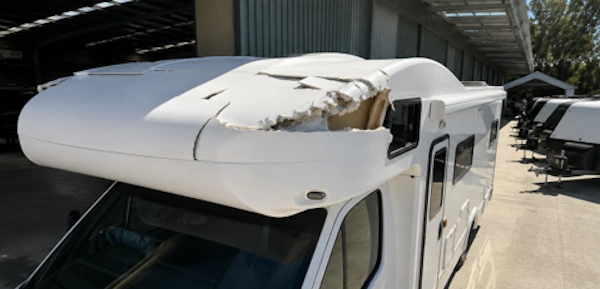
Overhead and Roof Damage
The driver’s cab may clear a tree, carport, service station canopy or height barrier while the upper body does not. The point of impact may involve the roof, Luton peak, air conditioner, awning, vents, solar panels or upper sidewall.
The visible damage may only show part of the problem.
An impact can crack fibreglass mouldings, distort roof panels, damage internal framing or dislodge mounted equipment. Wiring, seals and upper cabinetry may also be affected. If the roof or body seal is opened, water can enter the vehicle after the original incident.
RnR Refinish assesses the impact area and the surrounding structure before the repair method is finalised. Depending on the insurer-approved scope, the work may include fibreglass reconstruction, panel repair, frame work, replacement of roof-mounted equipment, sealing, paint refinishing and water testing.
Accident, Smash and Heavy-Impact Repairs
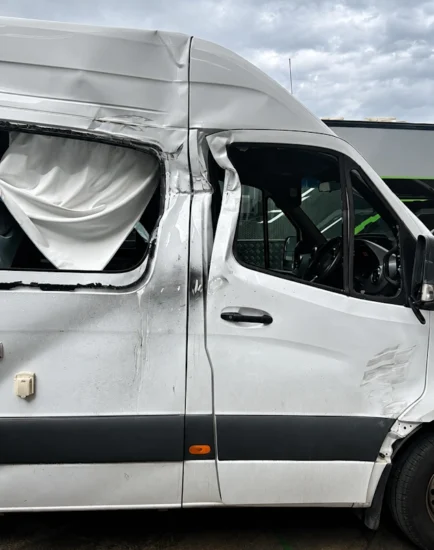
The force may travel through adjoining panels, internal framing, storage compartments, doors, windows and mounted components. What appears to be a localised body repair may require nearby areas to be removed so the internal damage can be inspected.
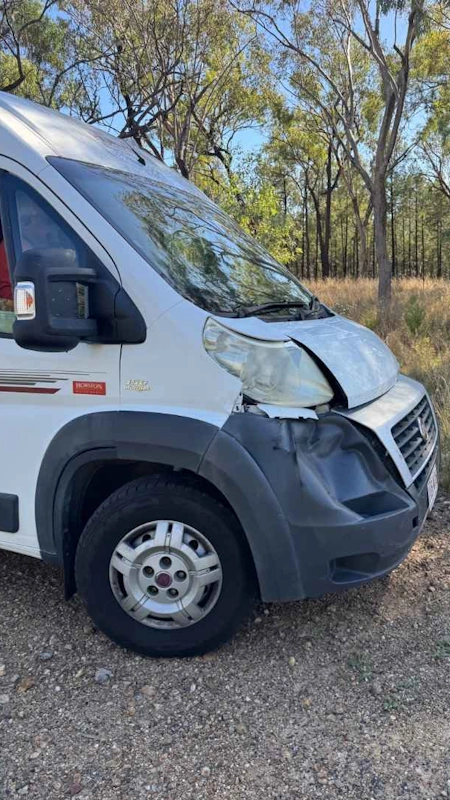
Heavy impacts, including kangaroo strikes, can affect the front body, chassis area, cooling systems, underbody and mechanical components.
These repairs may require towing, structural measurement, chassis alignment, fabrication, welding, fibreglass reconstruction, panel replacement and selected mechanical work.
A completed paint finish is only one part of the outcome. The structure, body alignment, mounting points and affected systems must also be checked before the motorhome is returned.
Fibreglass and Gelcoat Insurance Repairs
During an accident, a fibreglass section may crack, split, tear or separate from the surrounding body. The visible damage can extend beneath the surface or into mounting points and adjoining panels.
RnR Refinish repairs and reconstructs damaged fibreglass using methods suited to the affected component. The section is prepared, rebuilt and reshaped before being refinished to suit the surrounding bodywork.
Where gelcoat has been affected, its condition must also be assessed. Fading, oxidation, crazing, cracking and previous coating failure can influence whether the area is restored, sectionally refinished or repainted.
Our fibreglass capability is particularly useful for imported and discontinued motorhomes where replacement parts are difficult to source.
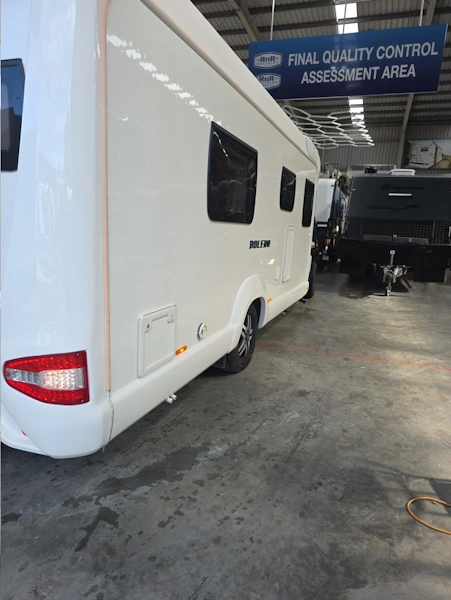
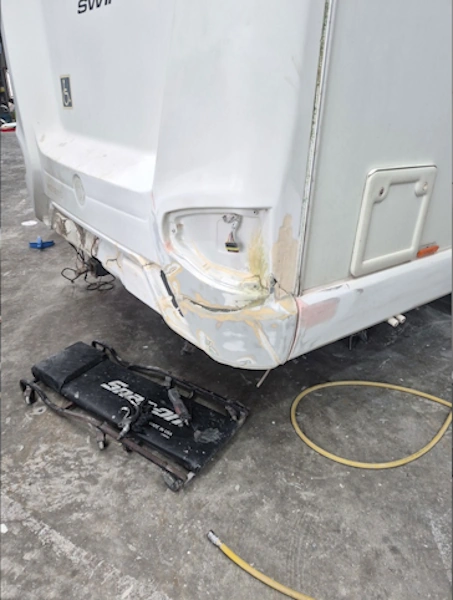
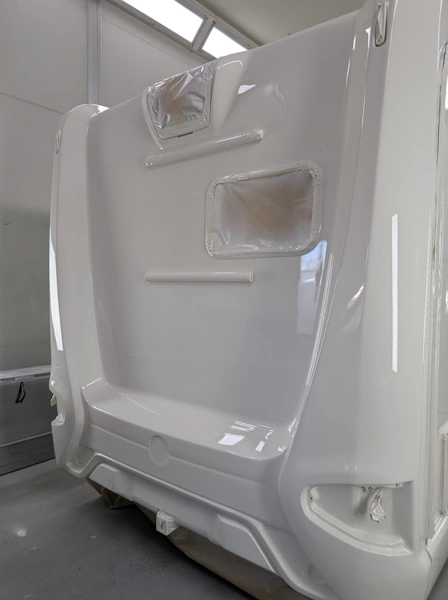
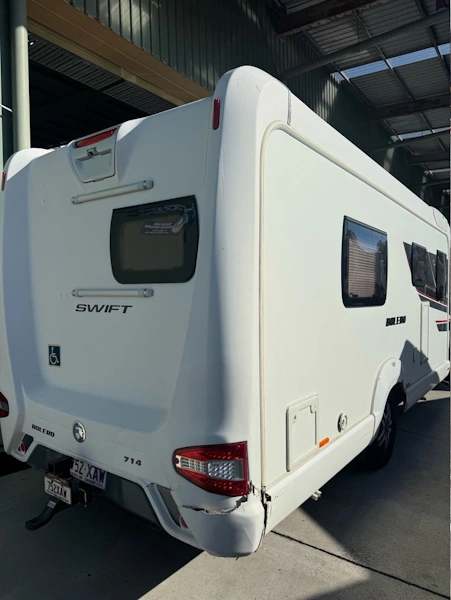
Composite Panel Repairs
Impact damage can weaken the bond between these layers even when the outer surface remains mostly intact. Moisture can also enter the panel and affect the internal core.
The correct repair depends on the panel construction, location of the damage, condition of the internal material and proximity to windows, doors, body joins or slide-outs.
Some composite panels can be repaired locally. Others may require a section to be rebuilt or the complete panel to be replaced.
The repair method must restore the panel’s function and structure rather than simply covering the visible damage.
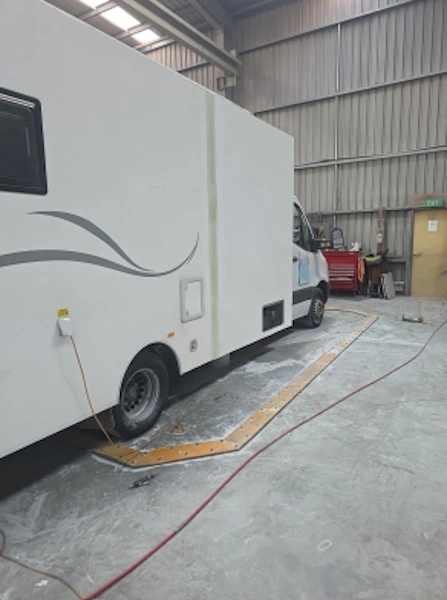
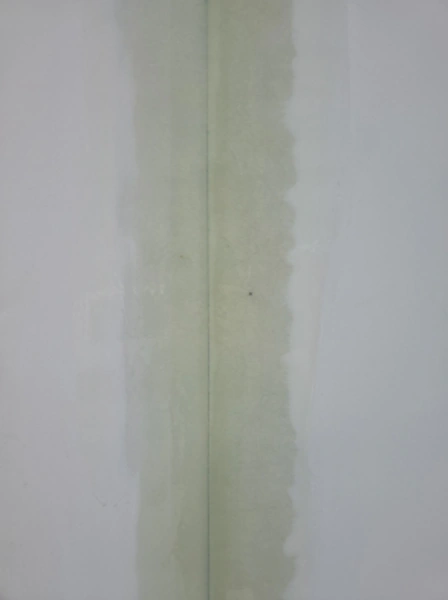
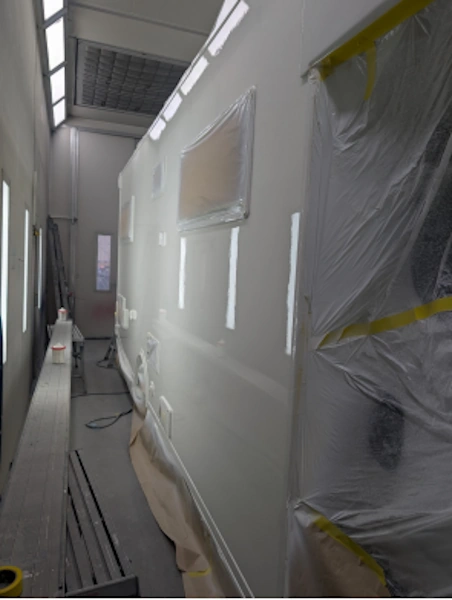
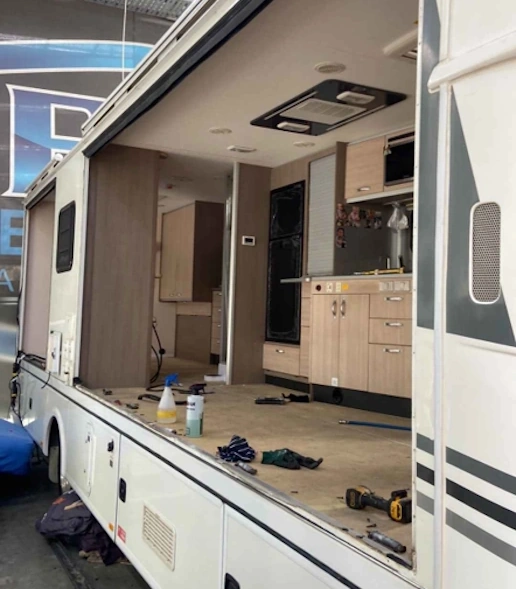
Motorhome Floor and Slide-Out Repairs
Hail may dent aluminium sheets, crack fibreglass, damage skylights, break vent covers or mark roof-mounted equipment. Strong winds and falling debris can affect awnings, windows, solar panels, air-conditioning covers and exterior fittings.
The assessment also needs to consider water entry.
A damaged skylight, vent, roof join or window seal may allow moisture into the walls, ceiling, cabinetry or floor after the storm has passed. This secondary damage may not be obvious during the first external inspection.
RnR Refinish can document the visible storm damage, check likely entry points and include the related insurer-approved repairs within the overall scope.
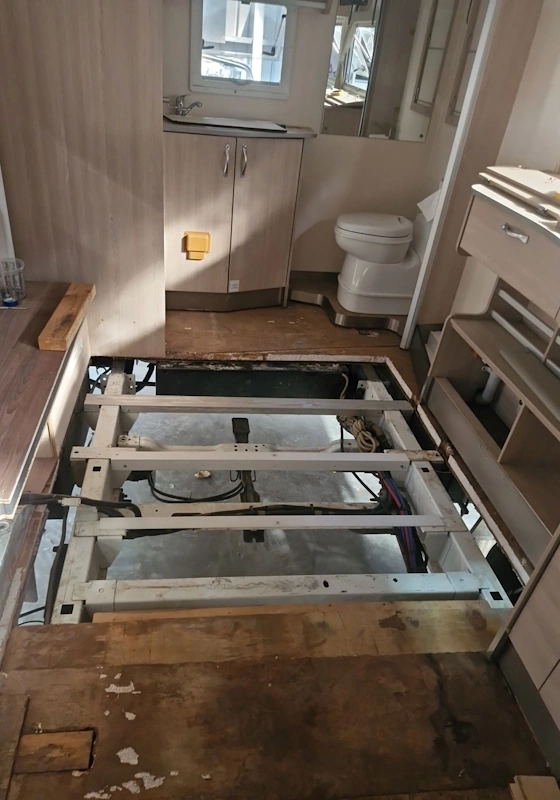
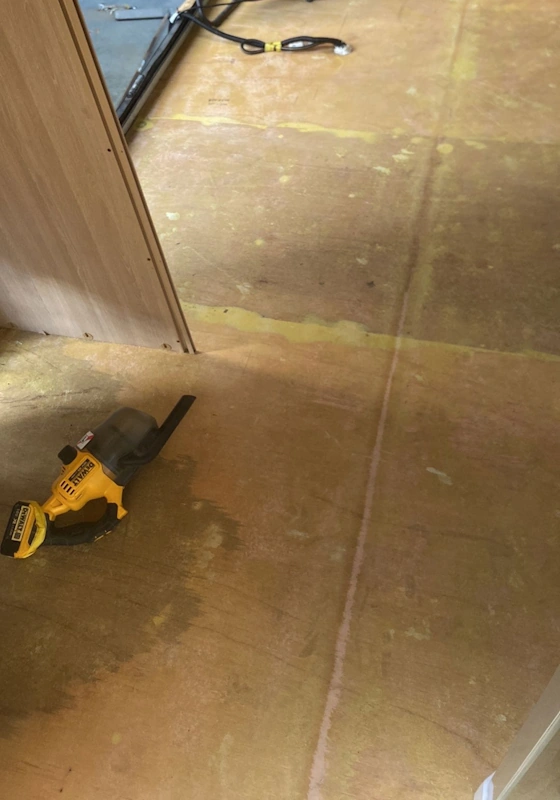
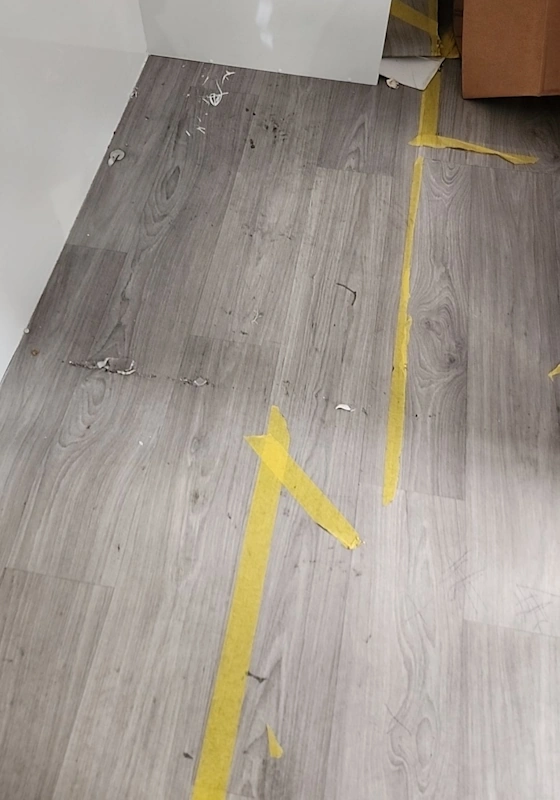
Motorhome Water Damage & Floor Repairs
Hail may dent aluminium sheets, crack fibreglass, damage skylights, break vent covers or mark roof-mounted equipment. Strong winds and falling debris can affect awnings, windows, solar panels, air-conditioning covers and exterior fittings.
The assessment also needs to consider water entry.
A damaged skylight, vent, roof join or window seal may allow moisture into the walls, ceiling, cabinetry or floor after the storm has passed. This secondary damage may not be obvious during the first external inspection.
RnR Refinish can document the visible storm damage, check likely entry points and include the related insurer-approved repairs within the overall scope.
Water Ingress and Internal Damage
A collision or heavy impact can involve the chassis, suspension points, steering components, underbody, cooling systems, exhaust, mounts or other mechanical areas.
The motorhome may still appear driveable while having damage that requires further inspection.
Where these items form part of the insured event, RnR Refinish can coordinate the body, structural, fabrication and selected mechanical repairs required under the approved scope.
Specialist measurement or chassis-alignment equipment may be used where appropriate. Final checks can include underbody inspection, wheel or component checks and road testing before handover.
Mechanical servicing and maintenance that are not connected to the claim may need to be quoted separately.
When Replacement Parts Are No Longer Available
Fibreglass mouldings and body components are often produced for a limited manufacturing run. Once the original vehicle or body style is discontinued, the replacement panel may no longer be available.
Overseas parts can also involve long lead times, high freight costs and uncertain supply.
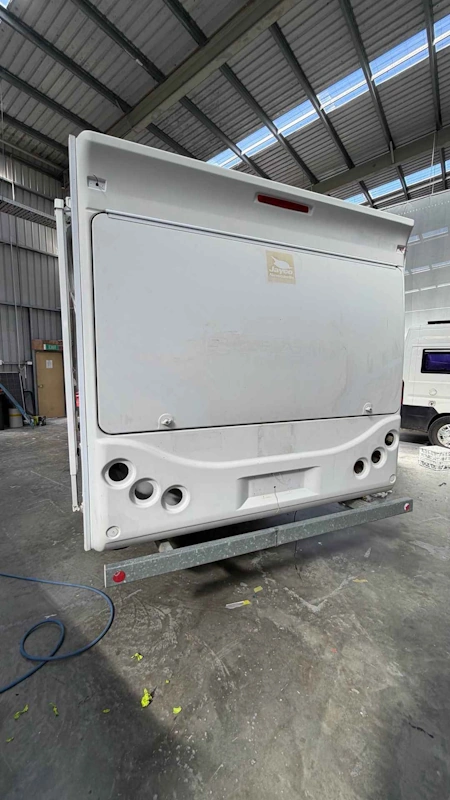
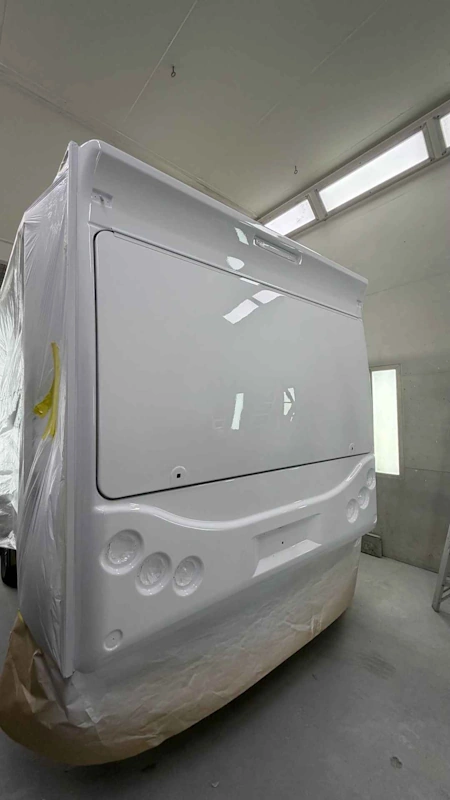
RnR Refinish can repair, fabricate or remould selected one-off fibreglass components. Where a matching part remains on the opposite side of the vehicle, its shape and measurements may help our technicians recreate the missing section.
This capability can apply to:
- tail-light panels
- bumper sections
- lower side mouldings
- storage doors
- front pillars
- spoilers
- rear body sections
- Luton peak components
Individual components can also be sent to our workshop for assessment, repair and refinishing where transporting the complete motorhome is unnecessary.
This can provide another repair option where a standard factory replacement cannot be sourced.
For more services, please see our website menu under Services.
Motorhome Insurance Repair Experience in Practice
After a major kangaroo strike, a motorhome may arrive by tow truck with damage to the front body, fibreglass sections, chassis area, appliances, underbody and mechanical components.
Our team records the vehicle’s condition, checks for water entry and prepares a detailed repair estimate for the insurer. Once the authorised work begins, dismantling may reveal further damage that could not be seen during the initial assessment.
The repair can then progress through structural measurement, chassis alignment, welding, fabrication, fibreglass reconstruction, seam sealing, paint preparation, refinishing and reassembly.
Affected electrical, mechanical and fitted components are checked before the vehicle moves through final inspection and road testing.
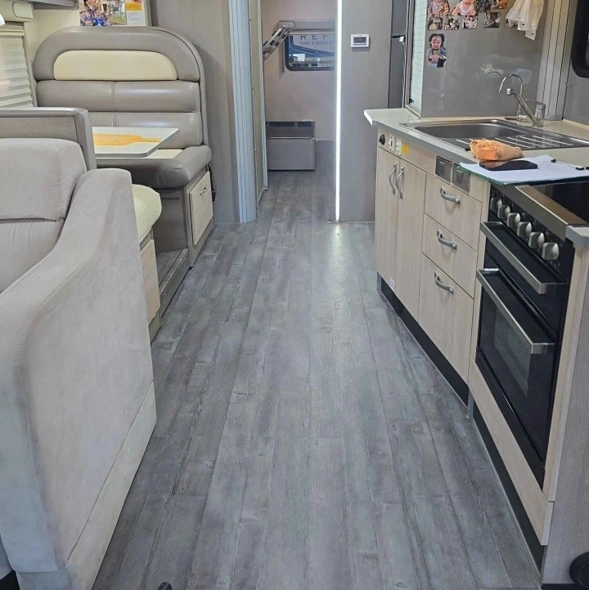
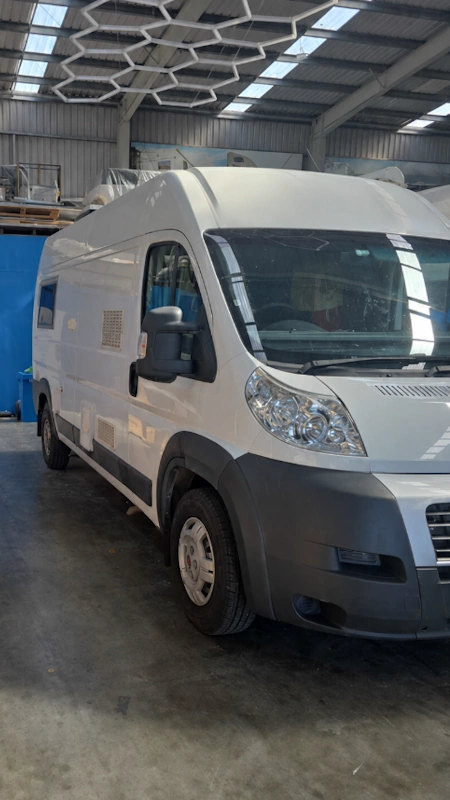
Other motorhome projects have involved complete floor and slide-out rebuilds. These repairs can require slide-outs to be removed with specialist lifting equipment before the main floor, internal frame, foam core and underbody sections can be replaced.
Once refitted, the slide-outs must be aligned, calibrated and tested. Larger projects may also include extended water, electrical, component and road testing before handover.
Every claim is different. Repair time depends on insurer authority, parts availability, hidden damage and the complexity of the work.
Motorhome Owners and Insurers Trust RnR Refinish
Our purpose-built Clontarf facility can accommodate large motorhomes, tow-in vehicles and repairs requiring extensive dismantling, structural work, lifting, fibreglass reconstruction, floor rebuilding, spray painting and reassembly.
Complex repairs may require estimators, fibreglass technicians, panel repairers, spray painters, fabricators, cabinet makers, auto electricians, plumbers and mechanical technicians.
Bringing these capabilities together gives the team a clearer view of how the body, living area and driveable vehicle affect one another. It also reduces the need for the owner to coordinate several unrelated repairers.
Customers receive updates as larger jobs move through key stages. Final checks are then matched to the work completed rather than relying only on the appearance of the repaired panel.
This provides a more coordinated process from the first assessment through to final handover.
